Overview
Kitz Weilman is a high-ranking officer in the Garrison Regiment who served as the acting commander of the Trost defense during a critical battle in Paradis's history. He represents the worst aspects of institutional military leadership — cowardice masked as authority, indecisiveness dressed up as caution, and a rigid adherence to protocol when flexible thinking is required. His defining moment comes when he orders his soldiers to fire cannons at Eren Yeager's Attack Titan form, nearly killing the one person who could have saved the city, all because he could not process the reality of a human-controlled Titan fighting on humanity's side.
Kitz is not a villain in the traditional sense. He is not cruel or malicious — he is simply an ordinary man promoted beyond his competence and placed in a situation that demanded extraordinary courage. His panic during the Battle of Trost nearly cost humanity its greatest weapon, and only the intervention of Dot Pixis — a truly capable commander — prevented disaster. Kitz survives the series, appearing occasionally in later arcs as a diminished figure, a walking reminder that the military bureaucracy of Paradis was filled with men who held power they did not deserve. His character serves as a foil to the heroic leaders of the Survey Corps, highlighting by contrast their bravery, decisiveness, and willingness to take risks for the greater good.
Appearance
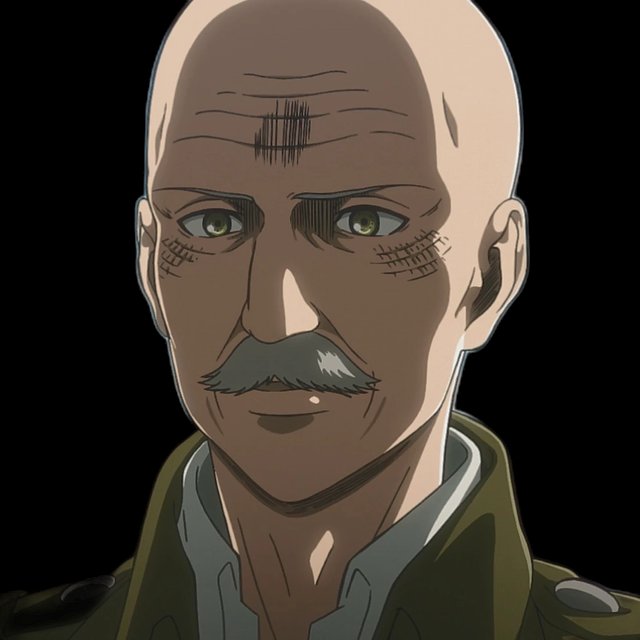
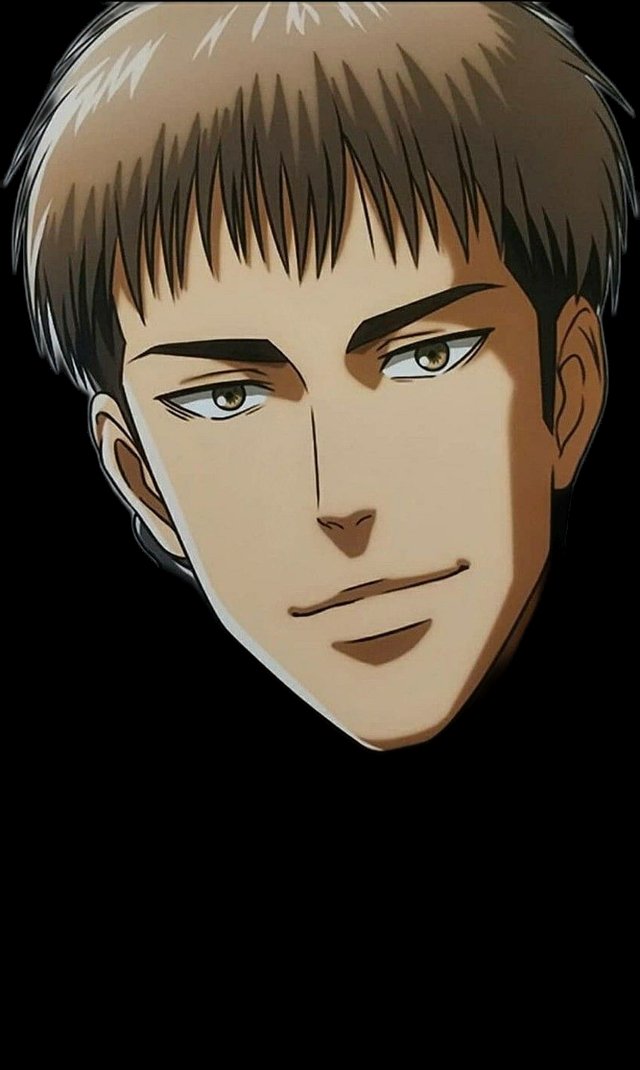
Kitz Weilman is a middle-aged man with a stout, somewhat soft build that reflects his life as a desk officer rather than a field soldier. He has a round face with a receding hairline, thin brown hair combed back, and small, nervous eyes that frequently widen in panic. His most distinctive feature is his thick, brown mustache that covers his upper lip, giving him the appearance of a stern bureaucrat. He typically wears the standard Garrison Regiment uniform — a dark green military jacket with brass buttons, a white shirt underneath, and the olive-green cape that identifies him as a member of the Wall defense force. His cap is often slightly askew, a small detail that conveys his perpetual state of disorganization.
During the Battle of Trost, Kitz's appearance becomes increasingly disheveled as the crisis deepens. His uniform becomes smudged with dust and sweat, his mustache droops, and his eyes grow wide with barely contained terror. He is frequently shown sweating profusely, his face flushed with stress, as he struggles to maintain the appearance of command while internally panicking. In his later appearances, Kitz looks older and more tired, with deeper lines on his face and a defeated slump to his shoulders. The visible decline in his bearing tells the story of a man who was broken by the pressures of command and never recovered from the shame of his failures during the Trost battle.
Personality
Kitz Weilman's personality is defined by fear and a desperate need to maintain the appearance of authority. He is not a bad person — he genuinely wants to protect humanity and fulfill his duty — but he is completely unequipped for the responsibilities thrust upon him. When faced with a crisis, his first instinct is not to act but to find someone else to blame. During the Battle of Trost, he spends valuable time screaming at his subordinates, demanding explanations, and looking for someone to tell him what to do rather than assessing the situation and making command decisions. His leadership style is reactive rather than proactive, driven by anxiety rather than strategy.
Kitz's most revealing trait is his rigid adherence to protocol and hierarchy. When Armin Arlet identifies Eren as the Attack Titan, Kitz cannot accept that a human could be a Titan, because it does not fit his understanding of how the world works. Instead of adapting to new information, he clings to his existing framework and lashes out at the source of the confusion. This inflexibility is a common characteristic of incompetent leadership — the inability to process information that challenges established beliefs. After being relieved of command by Dot Pixis, Kitz shows no resentment toward his superior. He is almost relieved to have the burden of command taken from him, quickly deferring to Pixis's authority. This reveals that Kitz never truly wanted power — he wanted the security that came with a rank, without the responsibility that accompanied it.
Abilities & Power
Kitz Weilman's abilities are those of an administrative officer rather than a combat commander. He rose through the ranks of the Garrison Regiment through seniority and bureaucratic competence, not through exceptional battlefield performance. He is familiar with standard Garrison procedures, supply chain management, and the chain of command, but these skills are largely irrelevant in a direct combat scenario. His ODM Gear proficiency is minimal — he is not expected to engage Titans directly as a senior Garrison officer, and his age and physical condition would make such combat inadvisable.
Kitz's primary authority comes from his position within the military hierarchy. As the senior Garrison officer in Trost at the time of the battle, he had the power to command the city's defenses, coordinate the deployment of cannons and soldiers, and make strategic decisions about the engagement. However, his inability to use this authority effectively during the crisis demonstrates that positional power is meaningless without the personal courage to wield it. He knows the theory of military command — he can quote regulations, describe standard operating procedures, and maintain the appearance of order — but he cannot handle the chaos of actual battle.
His most impactful moment comes not from his own competence but from his willingness to defer to someone more capable. When Dot Pixis arrives and takes command, Kitz immediately surrenders authority without protest. This act, born from a recognition of his own limitations rather than from strategic calculation, is arguably the most useful thing he does during the entire battle. By stepping aside and letting a true leader take charge, Kitz enables the successful defense of Trost. In this sense, his greatest ability is knowing when he is out of his depth, even if he cannot admit it to himself until the moment of crisis.
Story Arcs
Before the Fall — A Garrison Bureaucrat
Before the fall of Wall Maria, Kitz Weilman served as a middle-ranking officer in the Garrison Regiment, the defensive branch of the Paradis military responsible for manning the Walls and protecting the population. His career was unremarkable — he performed his administrative duties adequately, followed orders, and never distinguished himself in any meaningful way. He was the type of officer who exists in every military: competent enough to keep his position, but entirely lacking the qualities needed for true leadership. His promotion to a command position in Trost was the result of seniority rather than merit, a common failing in the Paradis military system that prioritized stability over capability.
The Battle of Trost — Panic and Incompetence
When the Colossal Titan breaches the gate at Trost, Kitz is thrust into the role of acting commander of the city's defense. The situation is catastrophic — Titans pour into the city, the garrison is demoralized, and communications are breaking down. Kitz responds exactly as an unprepared commander would: he screams orders, blames his subordinates, and makes decisions based on fear rather than strategy. His most infamous decision comes when he learns that Eren Yeager has transformed into a Titan. Rather than recognizing that a Titan fighting other Titans could be humanity's salvation, Kitz orders the garrison to fire cannons at Eren, declaring that all Titans must be eliminated regardless of their behavior. This panic-driven order nearly kills Eren and would have doomed the city if not for the intervention of Commander Dot Pixis.
Pixis arrives at the command post and immediately takes charge, countermanding Kitz's order to fire on Eren. He explains that a Titan fighting on humanity's side is a strategic asset, not a threat, and mobilizes a plan to plug the wall using Eren's hardening ability. Kitz, visibly relieved to have the burden of command lifted, defers to Pixis without argument. The contrast between the two officers is stark: Pixis remains calm, analytical, and decisive, while Kitz sweats, stammers, and panics. Pixis does not humiliate Kitz publicly but simply takes command and saves the day — a mercy that says as much about Pixis's character as Kitz's incompetence says about his.
Aftermath — A Diminished Figure
Following the Battle of Trost, Kitz continues to serve in the Garrison but in a significantly reduced capacity. His reputation is permanently damaged by his performance during the crisis, and he is no longer trusted with independent command. He appears briefly during the Uprising arc as a background figure, present in command meetings but contributing nothing of substance. He survives the fall of Wall Rose, the Uprising, and the eventual dismantling of the Walls, living to see the end of the Titan era. His later appearances show him as a tired, broken man, the weight of his failures pressed permanently onto his shoulders. Kitz Weilman is never given a redemption arc because he does not deserve one — he is simply a mediocre man who was exposed as mediocre when it mattered most.
Symbol of the Old Paradis Bureaucracy
Kitz Weilman's character serves a broader thematic purpose in Attack on Titan. He represents the old Paradis — the corrupt, stagnant, bureaucratic system that kept humanity caged within the Walls and prevented progress. The Garrison Regiment, despite being the largest military branch, was historically the least effective, staffed with officers who valued comfort over competence. Kitz is a product of this system: promoted for his willingness to follow rules rather than his ability to achieve results. His failure at Trost is not just a personal failure but a systemic one — a condemnation of a military culture that prioritizes hierarchy over talent. Just as the Survey Corps under Erwin represents the new Paradis — bold, willing to sacrifice, obsessed with progress — Kitz represents the old Paradis that had to be swept away for humanity to survive.
Relationship Network
Dot Pixis. Commander Dot Pixis is Kitz's superior officer and the epitome of everything Kitz is not. Where Kitz panics, Pixis remains calm. Where Kitz makes fear-based decisions, Pixis makes strategic ones. Pixis arrives at Trost, takes command from the overwhelmed Kitz, and successfully organizes the defense without humiliating him. Kitz defers to Pixis without resentment, recognizing — at least on some level — that Pixis is the leader the situation demands. Their relationship is a masterclass in the difference between positional authority and true leadership.
Eren Yeager. Kitz's relationship with Eren is defined by a single moment: Kitz orders cannons to fire at Eren's Titan form, nearly killing him. He does not know Eren personally and has no animosity toward him — he simply cannot process the idea of a Titan as an ally. After Pixis countermands the order, Kitz and Eren have no further meaningful interaction. The moment encapsulates the tension between the old guard and the new generation in Paradis.
Armin Arlet. Armin is the one who identifies Eren as the Attack Titan and begs Kitz not to fire. Kitz dismisses Armin as a panicked cadet, refusing to listen to someone so far below him in rank — even though Armin possesses critical intelligence. This interaction highlights Kitz's fatal flaw: his insistence on respecting hierarchy over expertise. A better leader would have listened to Armin's analysis regardless of his rank.
Nile Dawk. Kitz shares a collegial relationship with Nile Dawk, the Commander of the Military Police. Both men represent the Establishment within the Paradis military — conservative, risk-averse, and suspicious of the Survey Corps' radical methods. They move in the same circles and share the same bureaucratic mindset, though Nile is more politically savvy than Kitz ever was.
The Garrison Regiment. Kitz's relationship with his own soldiers is strained. He commands through fear and authority rather than respect and loyalty. His soldiers follow his orders because they must, not because they believe in him. After his failure at Trost, his authority within the Garrison is permanently undermined, and he becomes a cautionary tale for junior officers about the dangers of being promoted beyond one's competence.
Cultural Impact & Popularity
Kitz Weilman is not a popular character in the traditional sense, but he serves an important role in the Attack on Titan narrative as the embodiment of bureaucratic incompetence. Fans and critics frequently reference him as an example of the "Peter Principle" — the concept that people in a hierarchy rise to their level of incompetence. His panic-driven order to fire on Eren is often cited in discussions about leadership, fear, and the dangers of placing authority in the hands of those who cannot handle it. While he is not beloved in the way major characters are, Kitz is recognized as an effective narrative tool that highlights by contrast the exceptional qualities of leaders like Pixis and Erwin.
Kitz Weilman has become a minor meme within the Attack on Titan fandom, often used as shorthand for incompetent leadership or bureaucratic cowardice. His sweating, panicking face during the Trost battle is frequently screenshot and shared in discussions about bad managers or authority figures who crumble under pressure. While this may seem unflattering, it is actually a testament to the character's effectiveness — Kitz is designed to be disliked, and he succeeds perfectly at that role. He is not meant to be admired or mourned; he is meant to be recognized as a type of person that exists in every organization, and his presence in the story makes the heroism of other characters shine brighter by comparison.
Frequently Asked Questions
Kitz Weilman is a high-ranking Garrison Regiment officer who served as the acting commander during the Battle of Trost. He is best known for panicking under pressure and ordering his soldiers to fire cannons at Eren Yeager's Attack Titan form, nearly killing the one soldier who could have saved the city.
Kitz ordered the cannons to fire at Eren because he was terrified and unable to process the reality of a human-controlled Titan. His rigid mindset could not accept that a Titan might be an ally, so he defaulted to the standard protocol of killing all Titans. The decision was driven entirely by fear and a failure of leadership under extreme pressure.
After the Battle of Trost, Kitz was reassigned to a less demanding role within the Garrison. His authority was significantly reduced following his disastrous performance during the crisis. He survived the fall of Wall Maria and later appeared as a diminished background figure during the Uprising arc, never holding independent command again.
Kitz Weilman is not a villain but a representation of institutional incompetence. He is an ordinary man promoted beyond his abilities, whose cowardice under pressure nearly caused a catastrophe. His actions stem from fear and rigid thinking rather than malice. He serves as a foil to genuinely heroic leaders like Dot Pixis and Erwin Smith.
Kitz stands in stark contrast to leaders like Dot Pixis and Erwin Smith. Where Pixis remains calm and strategic under pressure, Kitz panics and makes fear-driven decisions. Where Erwin takes calculated risks for strategic gain, Kitz clings to protocol. Kitz represents the old Paradis bureaucracy, while Pixis and Erwin represent the bold leadership humanity needed to survive.