Overview
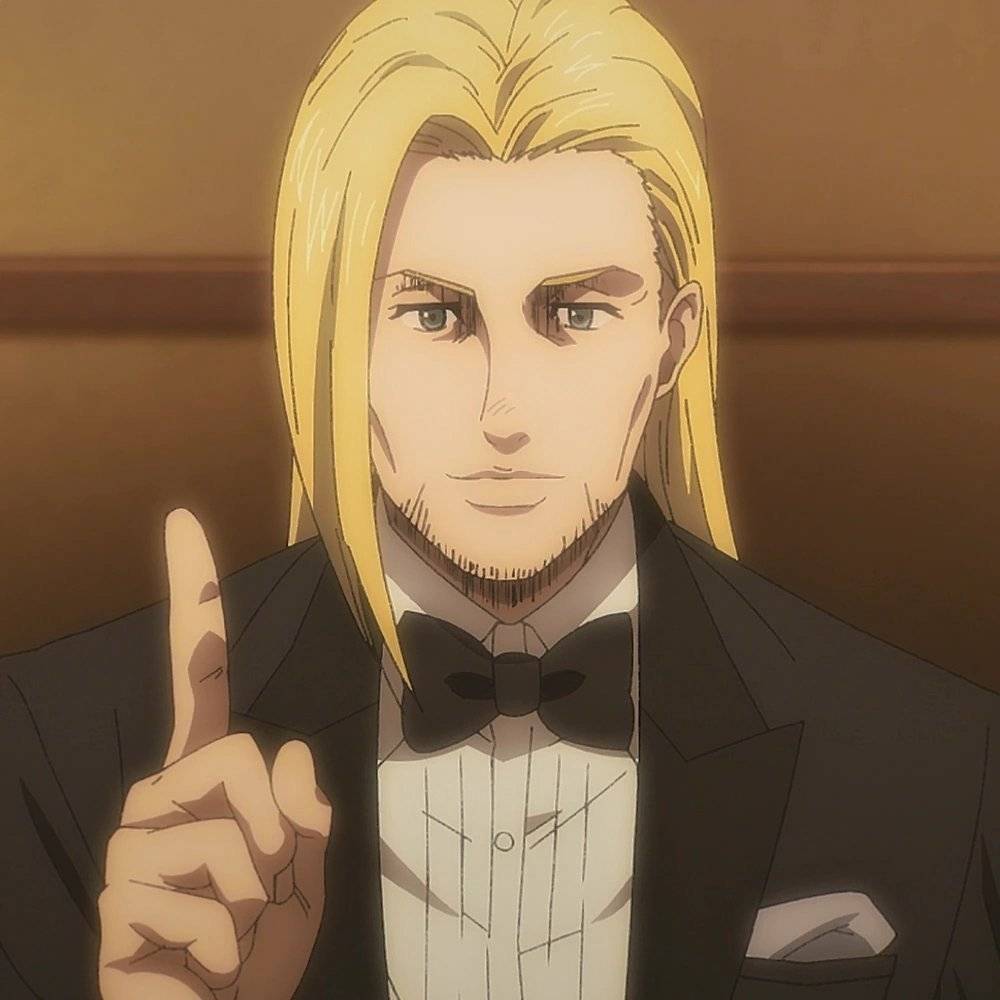
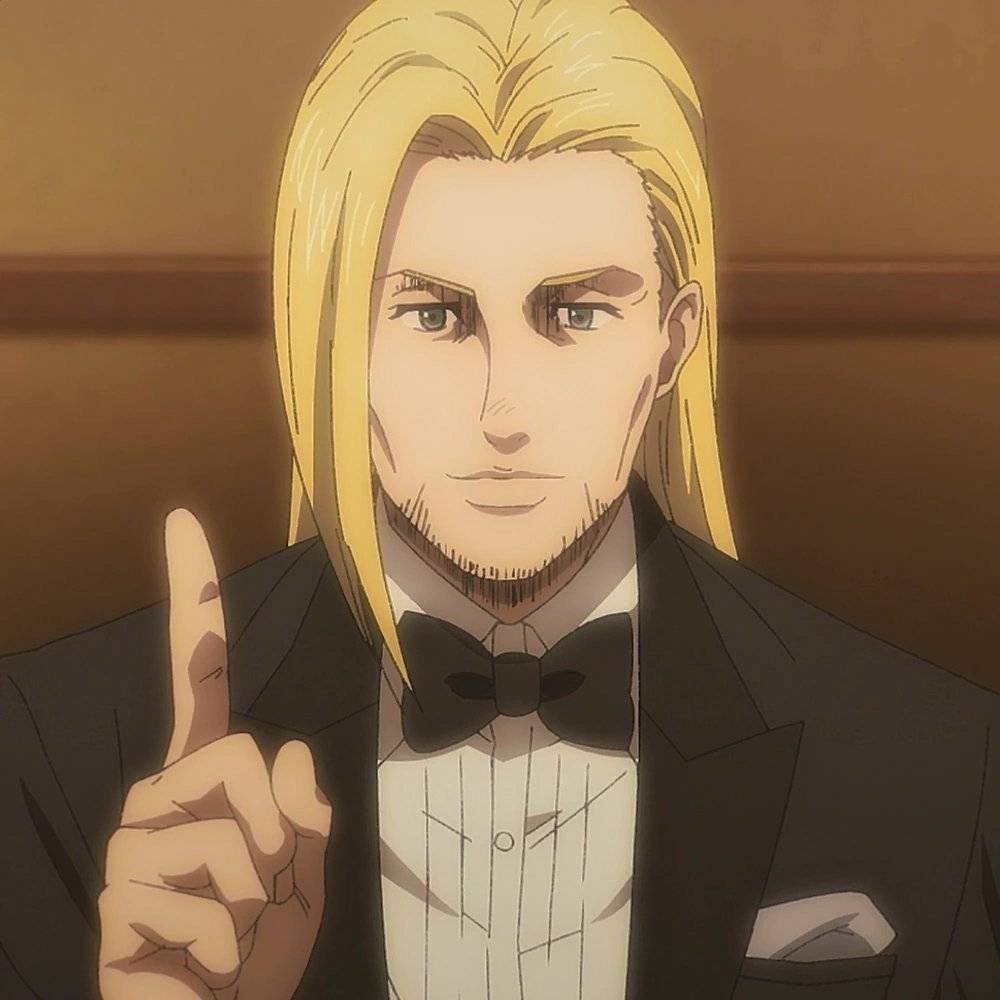
Willy Tybur was the public face of the Tybur family, the noble Eldian clan that held the War Hammer Titan for generations and secretly shaped Marleyan politics from behind the scenes. Unlike the Reiss family — the royal bloodline that ruled within Paradis's Walls under the 145th King's renunciation vow — the Tyburs chose to side with Marley during the Great Titan War, helping to dismantle the Eldian Empire from within. This alliance allowed the Tybur family to retain their wealth, status, and Titan power while the rest of the Eldian nobility was stripped of influence. Willy was not the War Hammer Titan's actual holder — that power belonged to his younger sister Lara Tybur. He served as the family's strategist, diplomat, and orator, the visible leader who shaped Marley's policies through his family's immense political influence.
Willy's single most defining act was the Declaration of War against Paradis, delivered at the Liberio International Festival before an audience of global dignitaries. In this speech, he revealed the truth about King Fritz's renunciation vow, the 145th King's retreat to Paradis, and the Tybur family's role in maintaining the global balance of power. He framed Paradis's founding Titan as an existential threat that required a unified global military response. What made Willy compelling as a character was his self-awareness — he acknowledged that the theater of war was a stage he had built, that he was playing a role in a tragedy he had written himself. His famous line "I was born into this world" encapsulated his philosophy: that his existence, his choices, and his death all served a purpose he had chosen for himself. Eren Yeager's attack during the speech cut Willy down before he could see his plan fully executed, but the war he started consumed the world.
Appearance
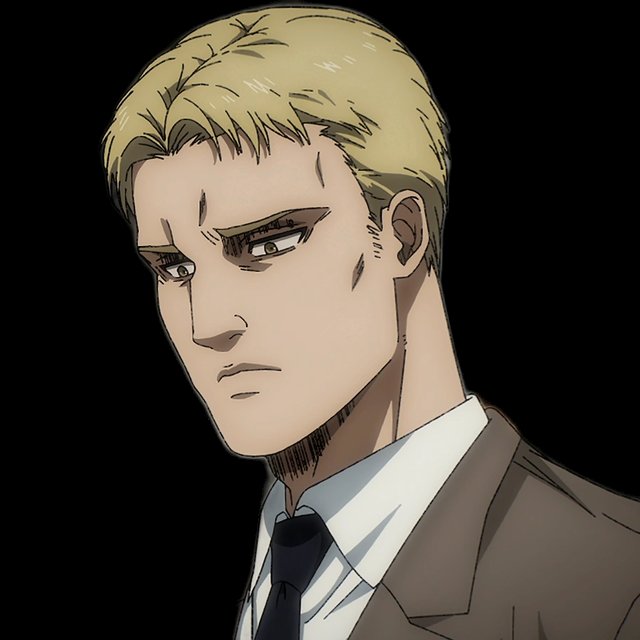
Willy Tybur is a tall, elegant man in his mid-thirties with sharp, aristocratic features that reflect the Tybur family's centuries of wealth and privilege. He has fair skin, intelligent dark eyes, and short brown hair swept back from his forehead in a style that projects both confidence and refinement. His face is lean and angular, with high cheekbones and a strong jawline typical of the Eldian nobility. He carries himself with the practiced grace of a career diplomat — shoulders back, movements measured, every gesture deliberate and calculated to project authority.
Willy's wardrobe reflects his status as the head of one of the world's most powerful families. During the Liberio Declaration, he wears a pristine white three-piece suit with a matching white tie and pocket square, the outfit deliberately chosen to convey purity, transparency, and moral authority. He accessorizes with gold cufflinks and a Tybur family signet ring — subtle markers of his lineage. In private settings with his family and close associates, Willy dresses more casually but still maintains an impeccable appearance: tailored vests, dress shirts with sleeves rolled to the forearm, and a perpetual glass of wine in hand. His physical presentation is that of a man who understands that appearances are weapons in the war of politics. He never appears disheveled or uncertain, even when discussing matters of life and death, because he knows that perception of weakness in his position would embolden his enemies.
Personality
Willy Tybur is defined by a profound sense of purpose and an almost theatrical understanding of his own role in history. He recognizes that the world is a stage and that he is both playwright and lead actor in the tragedy unfolding around him. His personality oscillates between warm, charismatic charm and cold, calculating pragmatism — he can share a drink with Magath as a friend and then casually discuss the necessity of mass death as a strategic tool in the same conversation. This duality makes him simultaneously sympathetic and terrifying, a man who genuinely believes in the necessity of his actions while fully acknowledging their moral cost.
Willy possesses an extraordinary capacity for long-term strategic thinking. He views events not immediate outcomes but historical arcs, understanding that his death would be as meaningful as his life in the larger narrative of humanity's liberation from the Titan curse. His willingness to sacrifice himself — to become a martyr for the war against Paradis — is not reckless idealism but calculated strategy. He knows that his death at Eren's hands would galvanize global opinion against Paradis more effectively than any political argument could. This self-awareness extends to his family legacy: he understands that the Tybur family's betrayal of the Eldian Empire, while pragmatic, has stained their name with dishonor, and he seeks to redeem that legacy through the declaration of truth. His final act in the Liberio arena is simultaneously a political maneuver and a personal confession, a man telling the truth about his family's sins as he steps onto the pyre of his own making.
Abilities & Power
Willy Tybur's primary power is his political influence and oratorical mastery. As the head of the Tybur family, he commands resources that rival those of the Marleyan government itself — financial assets accumulated over centuries, intelligence networks spanning every major nation, and political connections that reach into the highest levels of global power. The Tybur family's ability to shape Marleyan policy from behind the scenes is demonstrated by the seamless coordination of the Liberio festival's security, the diplomatic invitations extended to every major power, and the propaganda apparatus that framed the Declaration of War as a historic necessity rather than an act of aggression.
Willy's oratory is his most visible weapon. His Liberio speech is a masterwork of rhetorical construction: he begins by contextualizing the Titan curse's history, establishes the Tybur family's moral authority through confession of their own sins, reframes Paradis as a unified threat, and concludes with a call to action that leaves his audience both informed and inflamed. He controls the room's emotional temperature with precision, shifting between historical exposition, personal reflection, and urgent warning without losing narrative momentum. His voice, posture, and timing are those of a performer who has rehearsed every line, yet his delivery feels spontaneous and deeply felt.
Though Willy himself does not hold the War Hammer Titan's power — that belongs to his sister Lara — his access to the Titan is effectively unlimited. The Tybur family's tradition of separating the Titan power from the public leadership role means that Willy commands the War Hammer's strategic deployment without being personally responsible for its combat use. This arrangement allows him to maintain the appearance of a civilian diplomat while possessing one of the Nine Titans as a trump card. The War Hammer Titan itself is among the most versatile combat forms, capable of constructing weapons, shields, and structures from hardened Titan flesh. Willy's strategic direction of this power, combined with his political influence over the Marleyan military, makes him among the most powerful individuals in the world despite never personally fighting a battle.
Story Arcs
The Tybur Family Legacy
Willy's backstory is revealed through his Liberio speech and the historical records of the Tybur family. The Tyburs were one of the eight noble families that ruled the Eldian Empire during its age of expansion, controlling Titans and subjects across the known world. When the 145th King Fritz decided to abandon the empire's conquests and retreat to Paradis, the Tybur family chose a different path. They negotiated with Marley, offering to help dismantle the Eldian Empire in exchange for preserving their status and Titan power. This decision branded the Tyburs as traitors to the Eldian cause but allowed them to survive the empire's collapse. Willy was raised with the full weight of this legacy — a family that had saved itself by betraying its own people, a bloodline that claimed moral superiority while pulling the strings of an oppressive regime. This internal contradiction drove Willy's determination to cleanse the Tybur name through an act of radical honesty and sacrifice.
Building the Stage for War
Willy's primary arc in the narrative is the construction of the geopolitical conditions necessary for a united global war against Paradis. He spends years cultivating relationships with Marleyan military leaders, foreign diplomats, and global media figures, laying the groundwork for the Liberio Declaration. He works closely with Commander Magath to ensure the festival's security, knowing that the presence of global dignitaries would maximize the propaganda impact of his speech. Willy also manages the delicate politics of the Tybur family's relationship with the Marleyan General Staff, balancing their need for the War Hammer Titan's power against their resentment of the family's independence. He prepares his sister Lara for the possibility that the speech might trigger an immediate Paradis attack, positioning her as the War Hammer's secret weapon. The weight of preparation is immense — Willy knows that the lives of thousands and the future of global geopolitics rest on the success of a single speech.
The Liberio Declaration
The Liberio Declaration is the climax of Willy's story and among the most pivotal moments in Attack on Titan's narrative. Standing on a raised platform in the Liberio amphitheater, surrounded by the assembled dignitaries of every major nation, Willy delivers his historic address. He reveals the forbidden history of the Eldian Empire and the Great Titan War. He confesses the Tybur family's role in betraying the Eldian Empire and helping Marley establish its dominance. He admits that King Fritz's renunciation vow made it impossible for Paradis to attack, removing the pretense that Paradis posed an active threat. Then he pivots: Eren Yeager, he argues, represents a new threat — a Founding Titan wielder who is not bound by the 145th King's vow. If Paradis is left unchecked, the Founding Titan could be used to destroy all nations beyond the Walls. The speech is a rhetorical masterpiece that transforms Paradis from a forgotten island of survivors into the world's greatest enemy. As he speaks, Willy knows he has made himself a target, and he accepts this willingly.
Death and Aftermath
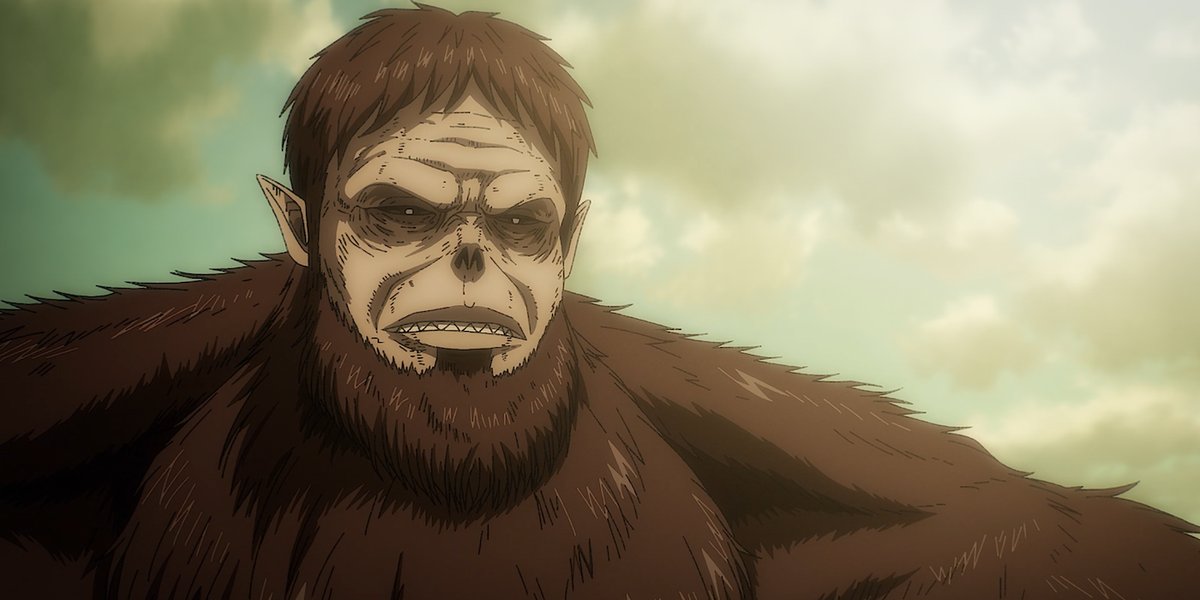
As Willy finishes his speech, Eren Yeager attacks in a devastating surprise assault. Transforming into the Attack Titan beneath the Liberio arena, Eren erupts through the stage and crushes Willy in his massive Titan hand. Willy dies instantly, his Declaration cut short but complete — the war he wanted has begun. In the chaos that follows, Lara Tybur transforms into the War Hammer Titan to fight Eren, but without Willy's strategic direction, the battle becomes a desperate defensive struggle. Willy's death serves exactly the purpose he designed: the world is horrified by Paradis's unprovoked attack on a diplomatic gathering, and global consensus shifts overwhelmingly toward war against Paradis. The nations that watched Willy's speech become the coalition that fights Paradis in the final seasons. Even in death, Willy Tybur controls the narrative — his martyrdom is exactly the catalyst he calculated it would be, and the war he started consumes the world exactly as he planned.
Relationship Network
Lara Tybur. Lara is Willy's younger sister and the actual holder of the War Hammer Titan. Their relationship is built on absolute trust and complementary roles: Willy handles politics, strategy, and public representation while Lara maintains the Titan power and trains for combat. Lara's devotion to Willy's plan is total, and she unleashes the War Hammer's full power to avenge his death.
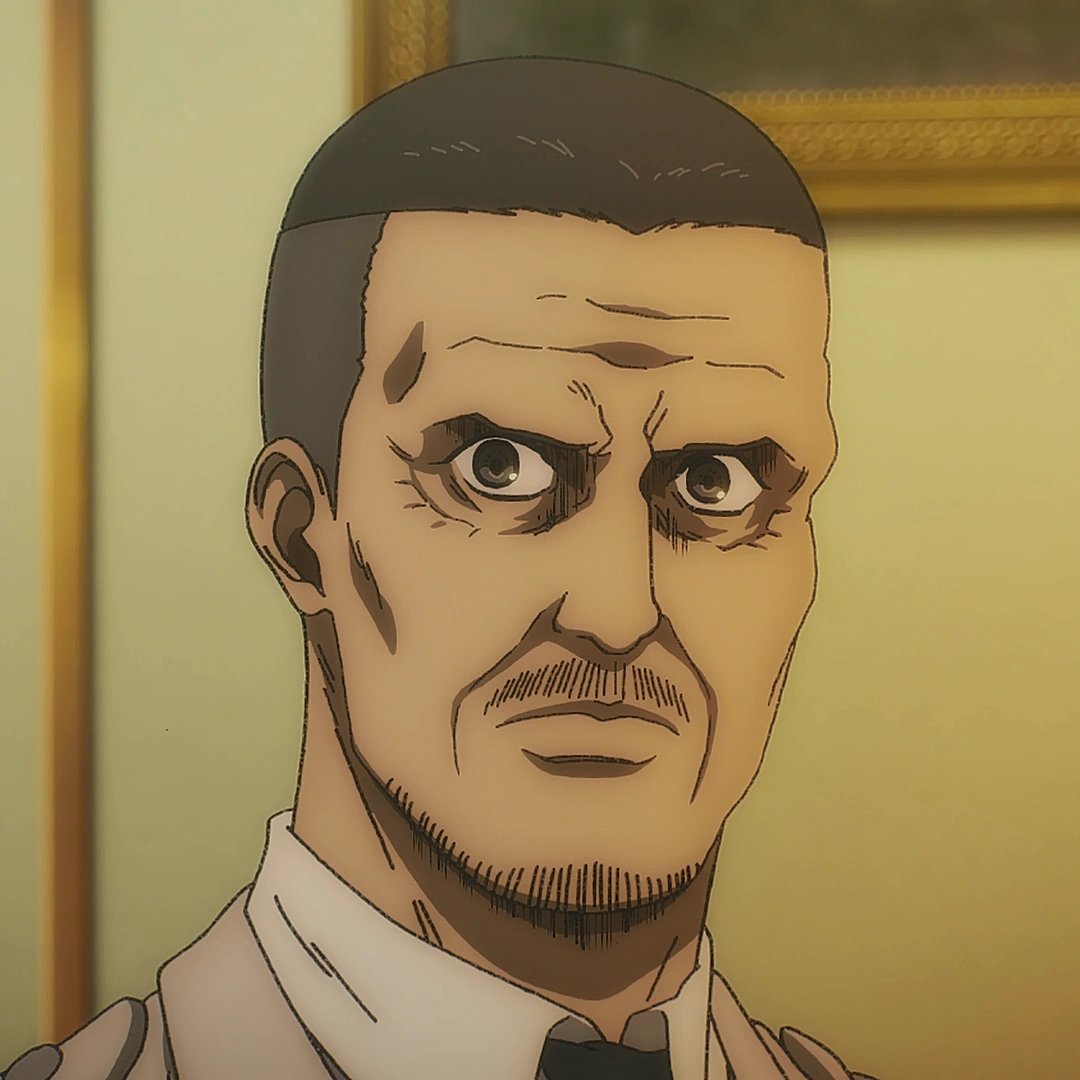
Theo Magath. Willy and Magath share a pragmatic partnership built on mutual respect. Magath handles the military logistics of the Liberio operation while Willy orchestrates the political theater. Magath is one of the few people who understands the full scope of Willy's plan, and his respect for Willy's strategic mind is evident in their interactions.
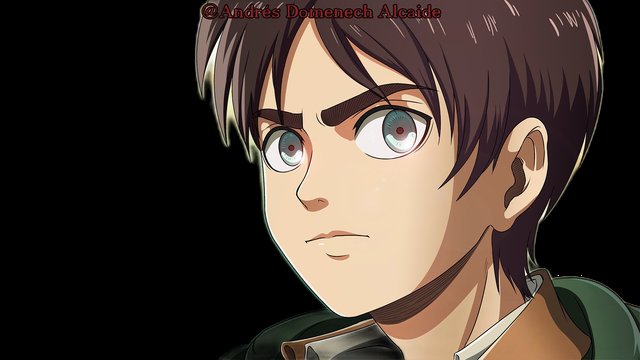
Eren Yeager. Willy and Eren never speak directly, but their relationship defines the series' second half. Willy's declaration is a direct challenge to Eren, and Eren's attack is the answer to that challenge. In a sense, Willy created the Eren that the world feared — by publicly labeling Eren as the enemy of all humanity, he forced Eren into the role of global destroyer.
The Marleyan General Staff. Willy's relationship with the Marleyan military hierarchy is complicated. They need the Tybur family's Titan power and political influence but resent their independence. Willy navigates this tension by offering them exactly what they want — a justification for war — while maintaining the Tybur family's autonomy and protecting his strategic initiative from their interference.
The Warriors. Willy's relationship with the Warriors is professional and distant. He respects their combat capabilities but has little personal connection to them. Reiner Braun, in particular, represents everything that Willy's war machine consumes — soldiers who sacrifice their humanity for causes they barely understand. Willy's detachment from the human cost of his plans is both his greatest strength and his most damning flaw.
Cultural Impact & Popularity
Willy Tybur occupies a singular position in Attack on Titan's character terrain as a figure who appears for only a single episode and a handful of chapters yet fundamentally reshapes the series' entire geopolitical framework. His Liberio Declaration speech is consistently ranked among the most memorable moments in Attack on Titan's anime adaptation, praised for its voice acting, animation direction, and narrative power. The line "I was born into this world" became an instant catchphrase among fans, often contrasted with Eren's own declaration of being born into this world during the Trost battle. The parallel between the two statements — one about accepting one's role in history, the other about claiming the right to exist freely — encapsulates the series' central philosophical tension.
Willy's character resonates with audiences because he is not a conventional villain. He is sympathetic in his honesty, terrifying in his competence, and tragic in his willingness to die for his cause. Critics have noted that Willy represents the banality of evil as expressed through systemic power — he does not personally hate Paradis or its people, but he has calculated that their destruction is necessary for global stability. His self-awareness makes him more unsettling than a cartoonishly evil antagonist because he acknowledges the moral weight of his choices and makes them anyway. The debate about whether Willy's declaration was justified — whether he genuinely believed Paradis was a threat or cynically manufactured a war for political advantage — continues among fans years after the series concluded. This ambiguity is the mark of a well-written character who refuses easy moral categorization.
Frequently Asked Questions
Willy Tybur was not the War Hammer Titan's holder. The actual power belonged to his younger sister Lara Tybur. Willy served as the public face of the family — the strategist, diplomat, and orator — while Lara maintained the Titan in secret. This separation of public leadership and combat capability was a Tybur family tradition spanning generations.
Willy revealed the truth about King Fritz's vow of renouncing war and the 145th King's retreat to Paradis. He confessed that the Tybur family had manipulated Marley's government for centuries. He declared that Eren Yeager's Founding Titan posed a new existential threat and called for a united global military coalition to destroy Paradis before it could strike first.
Willy was killed by Eren Yeager during the Liberio Declaration of War. As he finished his speech, Eren transformed into the Attack Titan beneath the Liberio arena and crushed Willy in his Titan hand before Willy could reach Lara to access the War Hammer Titan's power. His death was immediate, but the war he wanted had already begun.
The Tybur family allied with Marley during the Great Titan War because they believed the Eldian Empire's oppression of other nations through Titan force was unsustainable and morally wrong. They saw Marley's rise as inevitable and chose to negotiate a peaceful transition of power to avoid a catastrophic war that would cause immeasurable suffering.
Willy maintained a formal, strategic relationship with the Warriors. He respected their combat value and understood their importance as military assets, but his interactions with them were limited. His focus was on the geopolitical strategy against Paradis, not the day-to-day command of the Warrior Unit, which he left to Commander Magath and the General Staff.